
Homonyms, Why Children Confuse Words That Sound the Same
Homonyms, Why Children Confuse Words That Sound the Same
Feb 10, 2026
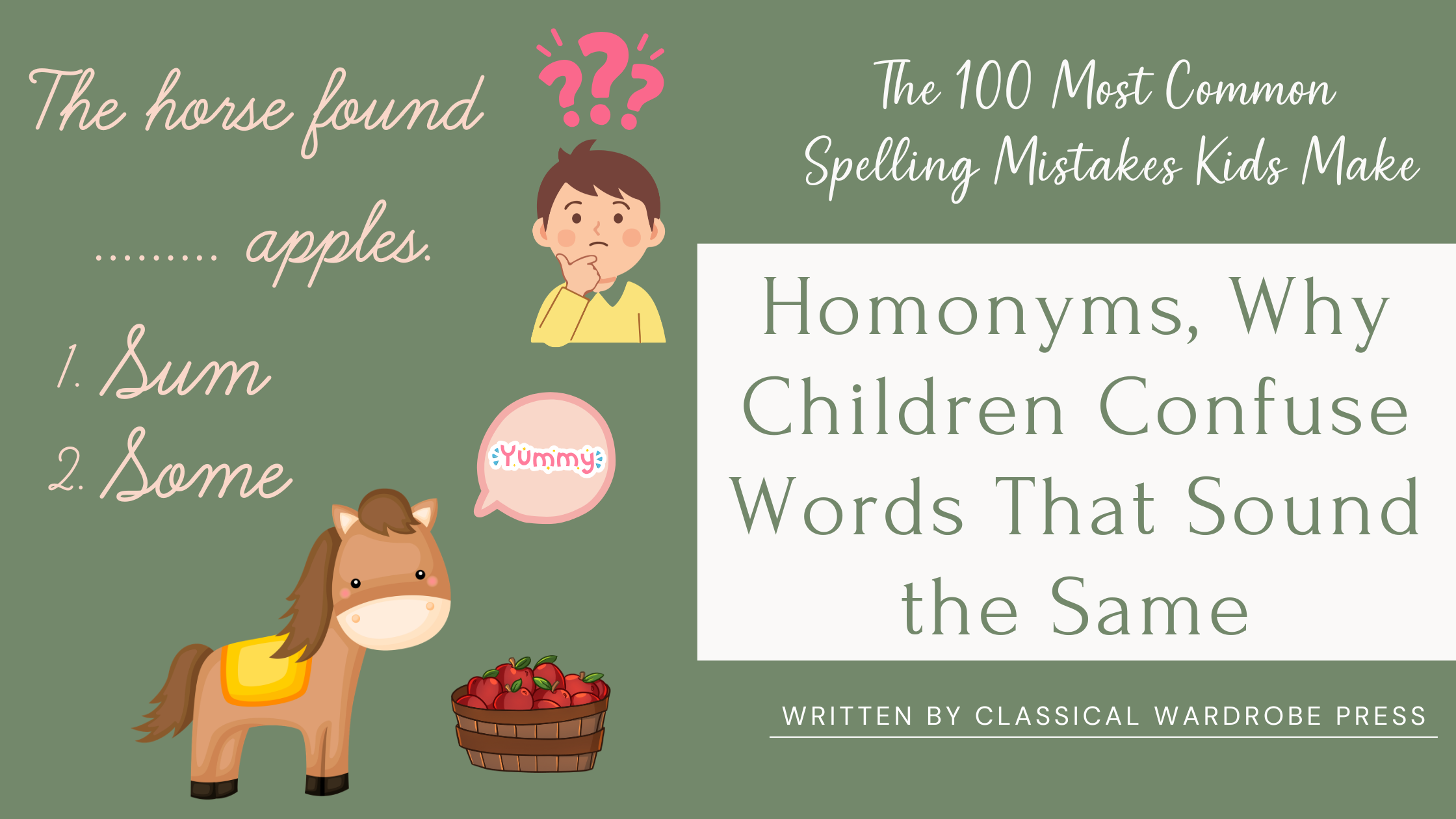
Homonyms in Spelling: Why Children Confuse Words That Sound the Same
Homonyms are one of the most common sources of spelling mistakes in children but also adults. Parents often wonder why a child who reads well and understands phonics still confuses words like there and their, or were and where. The answer is simple but often overlooked: homonyms cannot be learned through sound alone.
Homonyms are words that sound the same but have different meanings and spellings. Because their pronunciation offers no clue, children must rely on meaning, context, and visual memory to spell them correctly. Without this preparation, guessing becomes inevitable.
Here is a downloadable list of the Most Common Confusing Homonyms.
Why Phonics Alone Is Not Enough for Homonyms
Phonics is an essential foundation for early reading and spelling. It teaches children how sounds map to letters and patterns. However, when it comes to homonyms, phonics reaches its limit.
Words like there, their, and they’re are pronounced the same, yet each represents a different idea:
- there → a place
- their → possession
- they’re → a contraction
No amount of sounding out will help a child choose the correct spelling. The child must first understand what the word means in the sentence.
This is why homonyms often reveal a deeper issue: the child has not yet connected the written word to its idea.
Each Word Represents an Idea
In classical education, words are not treated as isolated symbols. Each word carries meaning. When two words share the same sound but express different ideas, the child must clearly associate one spelling with one idea.
In our post on Irregular Sight Words vs Regular Sight Words, we explained that Charlotte Mason emphasized that spelling depends largely on seeing words correctly and attentively, not on memorizing rules. A child spells well because the word is familiar to the eye and mind, because it has been met in context, understood, and noticed.
Homonym mistakes occur when this association is weak or absent. The solution is not more drilling, but clearer meaning.
The Role of Transcription in Teaching Homonyms
Charlotte Mason recommended transcription as the proper preparation for spelling. Through transcription, children carefully copy well-written sentences, allowing them to:
- see words used correctly,
- absorb spelling visually,
- and connect spelling with meaning naturally.
For example:
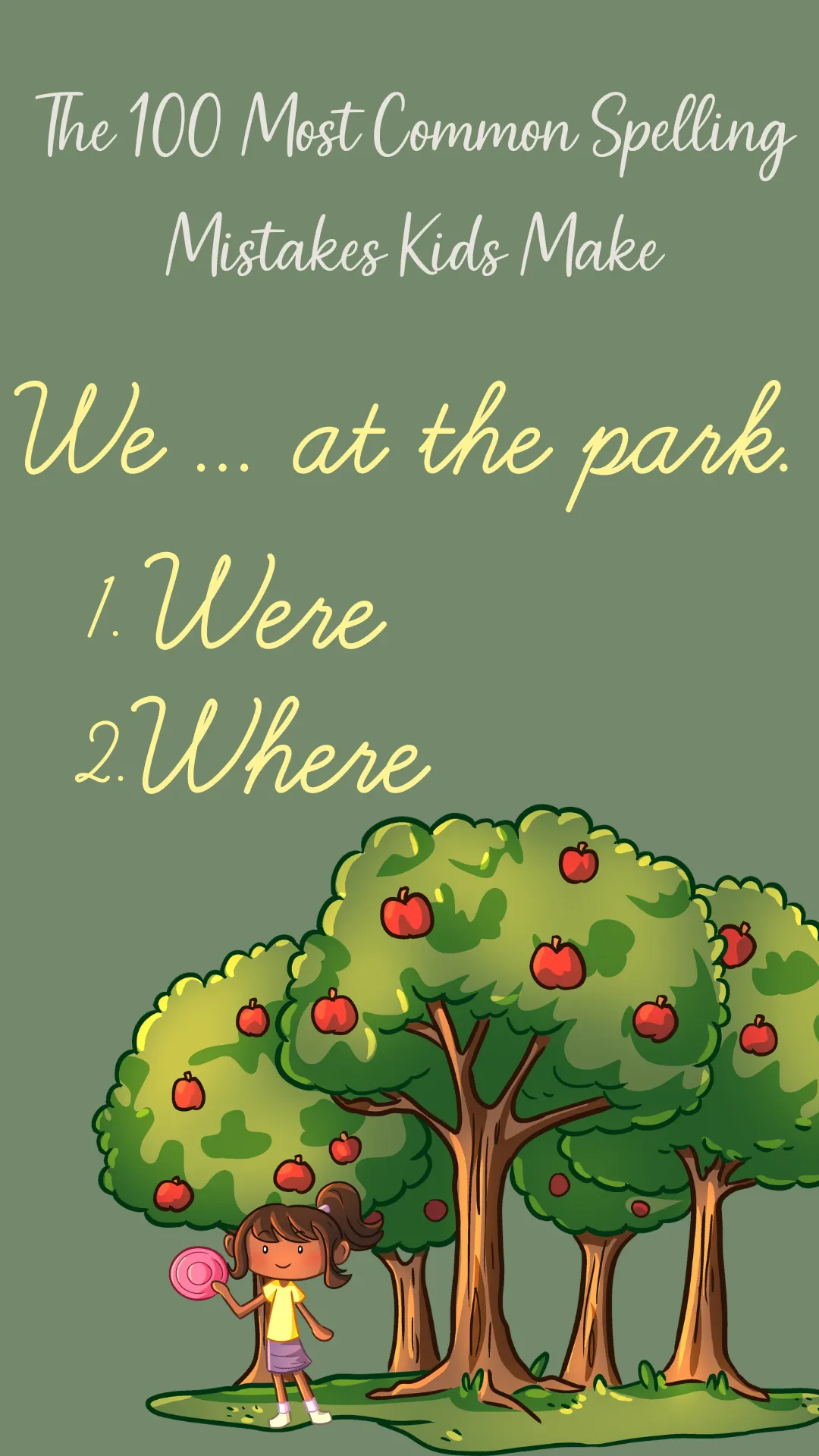
- We were at the park.
- Where is the park?
Here, the difference between where and were is not taught through sound, but through context and usage. Over time, the child forms a reliable mental picture of each word.
This quiet preparation is especially important for homonyms, which should never be introduced hastily or in isolation.
Our post Why Transcription Comes Before Dictation provides a walkthrough of what transcription is and how it should be applied in your introduction to spelling.
How to Teach Homonyms Effectively
A classical approach to teaching homonyms includes:
- introducing one pair (or trio) at a time,
- using short, meaningful sentences,
- focusing on what the word means, not how it sounds.
Avoid spelling lists without context. Instead, allow the child to meet the word in reading, observe it in transcription, and only later reproduce it through dictation.
Charlotte Mason warned that allowing children to spell words incorrectly before they are ready forms habits that are difficult to undo. With homonyms, patience protects accuracy.
A Stronger Foundation for Spelling
Homonym mistakes are not a sign that a child is careless or poor at spelling. They are a sign that spelling has been asked for before meaning has been secured.
When we teach children that each word represents an idea, spelling becomes logical and calm. The child is no longer guessing between spellings that sound the same, but choosing the word that fits the thought.
In The Classical Spelling Corner, we return to this principle again and again: spelling is built on meaning first. When meaning is clear, correct spelling naturally follows.