
Irregular Sight Words vs Regular Sight Words
Irregular Sight Words vs Regular Sight Words
Jan 21, 2026
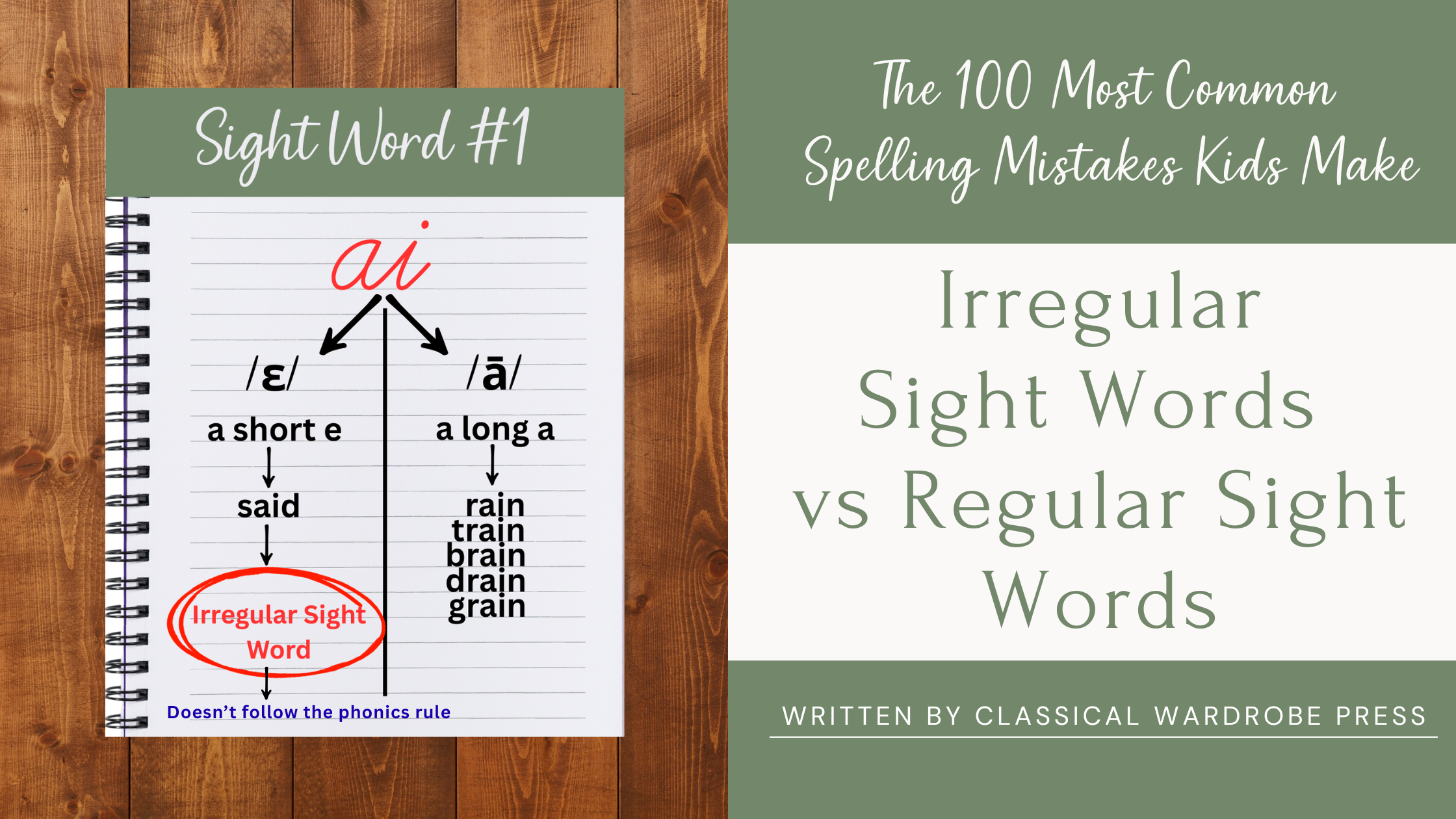
Sight words are often one of the most confusing parts of early reading instruction for parents. The idea is that the children must “memorise” them, practise them daily, and master them quickly, in order to be able to decode texts and read. Parents have an overwhelming number of choices when it come to sight words flash cards and standalone sight words workbooks. Yet many spelling mistakes seem to appear because of sight words rather than despite them.
One of the most important distinctions to understand is the difference between regular sight words and irregular sight words. This distinction can change how you approach reading, spelling, and even your expectations of your child.
What Are Sight Words?
Sight words are words that appear frequently in written English and are expected to be recognised quickly and automatically. Many sight word lists, such as the Dolch or Fry lists, include words like the, was, said, come, and they.
The problem is that these lists often group very different types of words together, even though children learn them in very different ways.
You can download our Dolch Sight Words Regular & Irregular (Printable List)
Regular Sight Words
Regular sight words are words that can be sounded out using normal phonetic rules, or at least mostly so. Examples include:
- and
- in
- it
- can
- up
Children may eventually recognise these words “by sight”, but they don’t need to rely on memory alone. With enough exposure through reading, copying, and gentle phonics instruction, these words become familiar naturally.
For regular sight words:
- phonics work (the words look like they sound)
- repetition through reading is enough
- spelling develops alongside reading.
Regular sight words benefit greatly from context. When children meet them again and again in meaningful sentences, their recognition becomes effortless.
Irregular Sight Words
Irregular sight words, on the other hand, contain spellings that do not fully follow common phonetic patterns.
Examples include:
- was
- said
- the
- come
- one
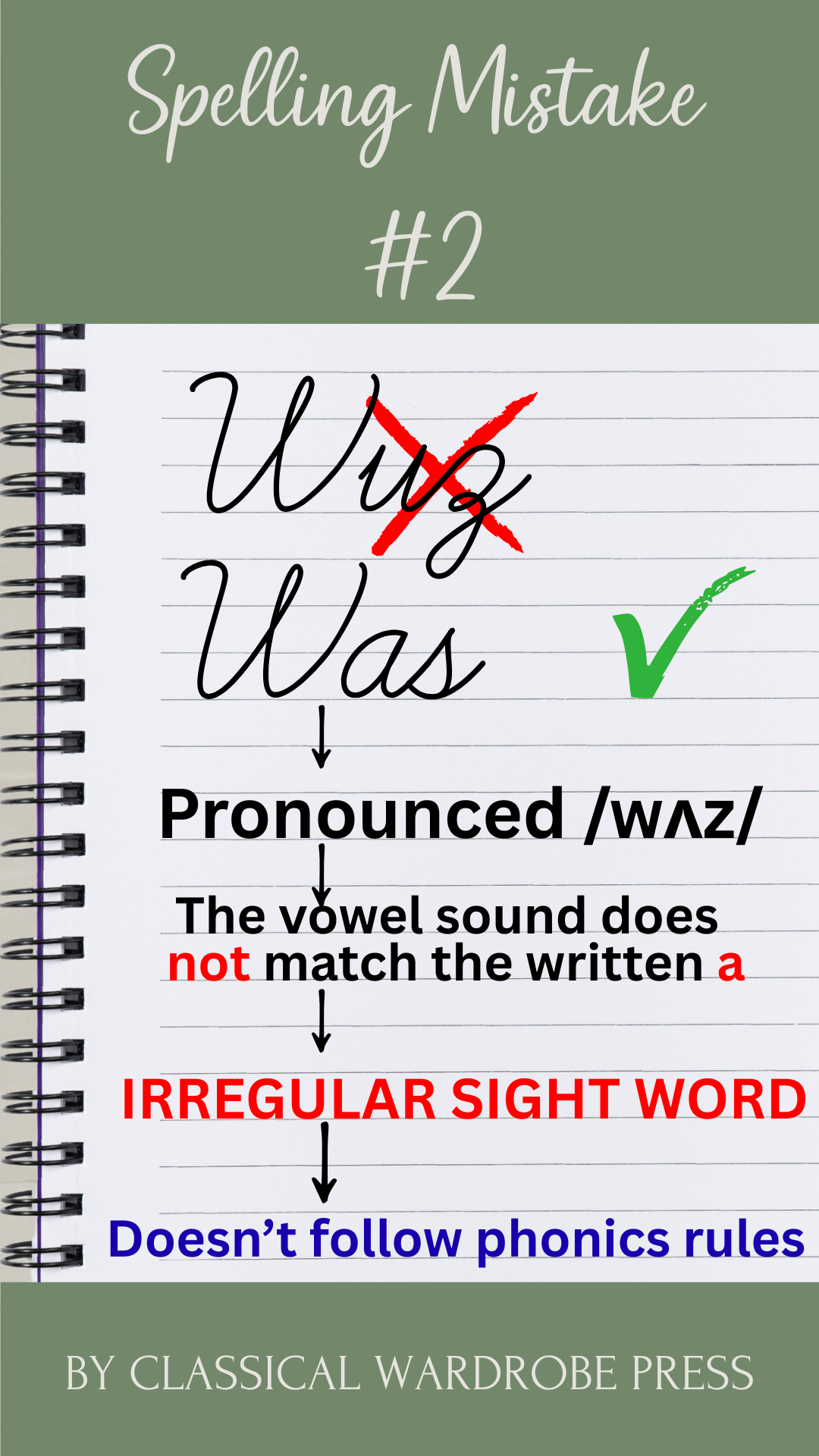
Take was as an example. Phonetically, a child hears /wʌz/, so spelling it as wuz (or woz depending on your exact local pronunciation) is not carelessness, it is logical.
The child is spelling by sound, which is exactly what early spellers are meant to do.
Irregular sight words:
- often require extra time
- benefit from explanation, not drilling
- should be introduced gently and in context.
These words cannot be fully “decoded,” but they can still be understood, especially when met repeatedly in good literature.
Why This Distinction Matters
When we fail to distinguish between regular and irregular sight words, we risk:
- expecting memorisation too early
- correcting children unnecessarily
- discouraging confident spelling attempts.
Understanding the difference allows parents to respond calmly to mistakes and to support spelling development without pressure.
A child spelling said as sed or was as wuz/woz is showing phonetic awareness, not failure.
Sight Words in Context, Not Isolation
Charlotte Mason strongly cautioned against teaching language in fragments. In Home Education (Volume 1, p. 204), she emphasised the use of prose and poetry rich in vocabulary, rhythm, and structure, allowing children to absorb language naturally through meaningful exposure.
"In the first place, let us bear in mind that reading is not a science nor an art....Learning to read is no more than picking up, how we can, a knowledge of certain arbitrary symbols for objects and ideas... For the arbitrary symbols we must know in order to read are not letters, but words." Charlotte Mason, Home Education (Volume 1, p. 215)
Associating a noun to an object or a verb to an action is fairly simple even for a child, however most sight words are what we call either grammar words or function words. These function words don’t carry meaning on their own, as they show relationships between other words in a sentence.
A standalone sight word doesn't mean much, it is only within the context of a whole sentence and text that the symbol the word represents can be understood.
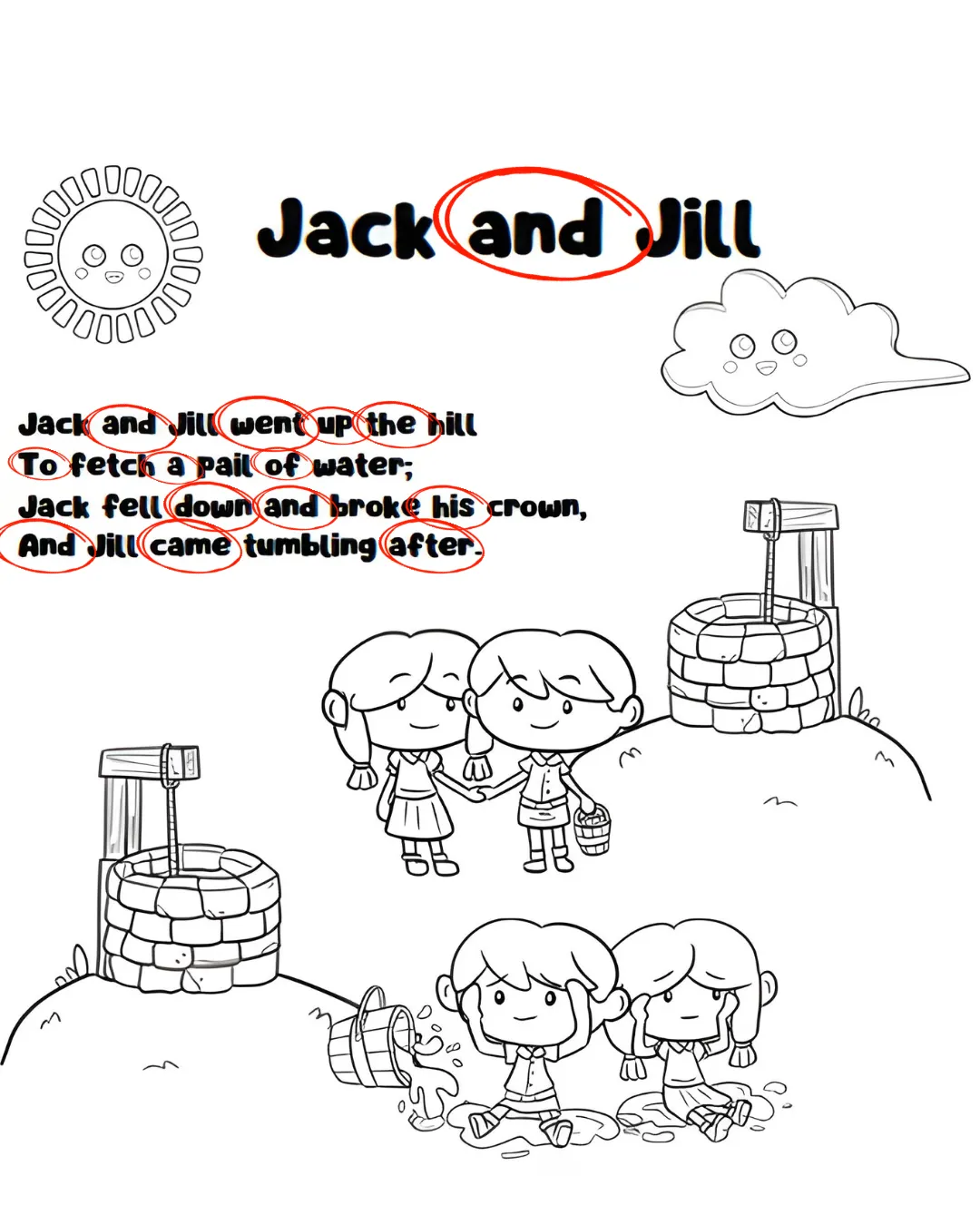
For example, the word "to" won't do much for the child on its own. However, put into context, "Jack and Jill went up the up hill to fetch a pail of water", the child can associate and visualize the word "to" to an idea, meaning, and purpose.
That is what we mean by language absorbed through living ideas, not isolated lists.
This approach is why, at Classical Wardrobe Press, we have chosen to root our early literacy materials in traditional nursery rhymes, many drawn from Mother Goose. These rhymes are loved by children and parents and make the reading lessons exciting and a pleasure. Furthermore the language is rich, not "diluted literature", as Miss Mason would call it. In the first verse of the well loved nursery rhyme "Jack and Jill" alone, we can count eleven different sight words.
Building Good Habits Early
Good spelling does not begin with lists and drills. It begins with:
- abundant reading
- copying well-written sentences
- exposure to rich language
- patients and time.
By understanding which sight words are regular and which are irregular, parents can guide their children with patience and confidence, allowing spelling skills to mature naturally; just as reading does.
Spelling is not a race. It is a habit formed slowly, through attention, language, and care.
It would be a privilege to support you on that journey.