
The Silent "gh"
The Silent "gh"
May 18, 2026
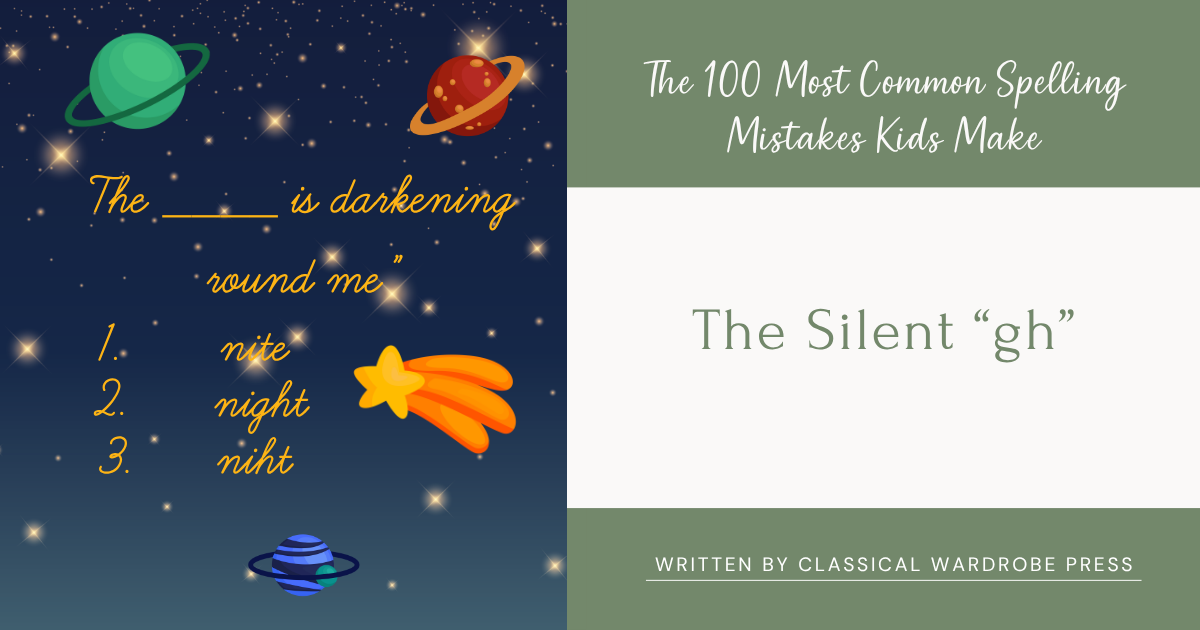
One spelling mistake children often make is writing lite instead of light, or nite instead of night.
The confusion is understandable. When we say these words aloud, we do not pronounce the letters gh at all.
We say:
- light → /laɪt/
- night → /naɪt/
- bright → /braɪt/
So why do these words still contain gh? The answer lies in the history of the English language.
When the Silent “GH” Was Pronounced
In earlier forms of English, the letters gh represented a real sound. It was a rough sound made in the back of the throat, similar to the sound still heard in some Scottish or German words today.
For example, the word night was once pronounced more like:
- niht
The gh was not silent at all.
Over time, English pronunciation changed. The rough throat sound gradually disappeared from spoken English, especially in southern England. However, the spelling remained.
This is why we still write:
- night
- light
- daughter
- though
even though the gh is no longer pronounced.
English spelling often preserves older forms of words, giving us a glimpse into the history of the language.
Silent GH Does Not Always Sound the Same
One reason children struggle with silent gh words is that the pronunciation changes from word to word.
For example:
- light → gh is silent
- night → gh is silent
- enough → gh sounds like /f/
- laugh → gh sounds like /f/
This explains why children often write:
- enuf
- laf
- lite
In our earlier post on The 100 Most Common Spelling Mistakes Kids Make: English Spelling History Mistakes, we explored how many spelling mistakes come from older forms of English that no longer match modern pronunciation. Words with gh are excellent examples of this.
Why Children Write “Lite”
When a child writes lite, they are spelling the word exactly as it sounds. This is a natural stage of learning. Early spellers often rely fully on phonics and sound alone.
But English spelling is shaped not only by sound, but also by:
- history
- word families
- older pronunciation patterns
Understanding this helps children move from guessing toward observation and recognition.
Connecting This Pattern to Other Spelling Rules
This silent gh pattern connects naturally to other historical spelling patterns we have explored in previous posts.
In our post on Why Would, Could, and Should Have a Silent L, we saw that letters sometimes remain in spelling long after their pronunciation disappears.
Similarly, in our post on The F to VES Spelling Rule: Why “Leaf” Becomes “Leaves”, we explored how older pronunciation patterns shaped modern spelling.
Together, these examples show that English spelling often carries traces of the past.
Learning Spelling Through Living Language
Rather than asking children to memorize long lists of difficult words, it is often more helpful to begin with a beautiful sentence from a well-written story or poem.
The child first encounters the word naturally in meaningful language. Attention is then gently drawn to the spelling pattern itself.
For example, here is the full poem Nightfall by Robert Louis Stevenson from A Child’s Garden of Verses:

The child notices the word night within the context of the story. From there, we can begin observing the unusual gh spelling and exploring related words that share the same pattern:
- light
- bright
- sight
Then compare another group:
- enough
- laugh
- cough
The child begins to notice that the letters are similar, but the sounds are not always the same.
Questions naturally arise:
- What letters do these words share?
- What sound do we hear?
- Does the gh always sound the same?
This approach develops attention, observation, and curiosity. Instead of memorizing isolated spellings, children begin recognizing spelling families and historical patterns within living language.
This method reflects the educational philosophy of Charlotte Mason, who encouraged children to learn through rich literature, poetry, copywork, and attentive reading rather than mechanical drills.
When children repeatedly encounter well-written sentences, the correct spelling gradually becomes familiar to the eye. Over time, they begin recognizing these patterns naturally through meaningful reading experiences.
A Language With a Long Memory
English spelling can sometimes feel unpredictable, but many unusual spellings reflect the long history of the language.
The silent gh in words like light, night, and enough is one small reminder that English words were not always pronounced the way they are today.
When children begin to understand these patterns, spelling becomes less mysterious and more meaningful. And with steady exposure, careful observation, and thoughtful practice, even silent letters become familiar, one word at a time