
The Silent WR Spelling Pattern: Why We Write Wrong, Write, and Wrist
The Silent WR Spelling Pattern: Why We Write Wrong, Write, and Wrist
Jun 05, 2026
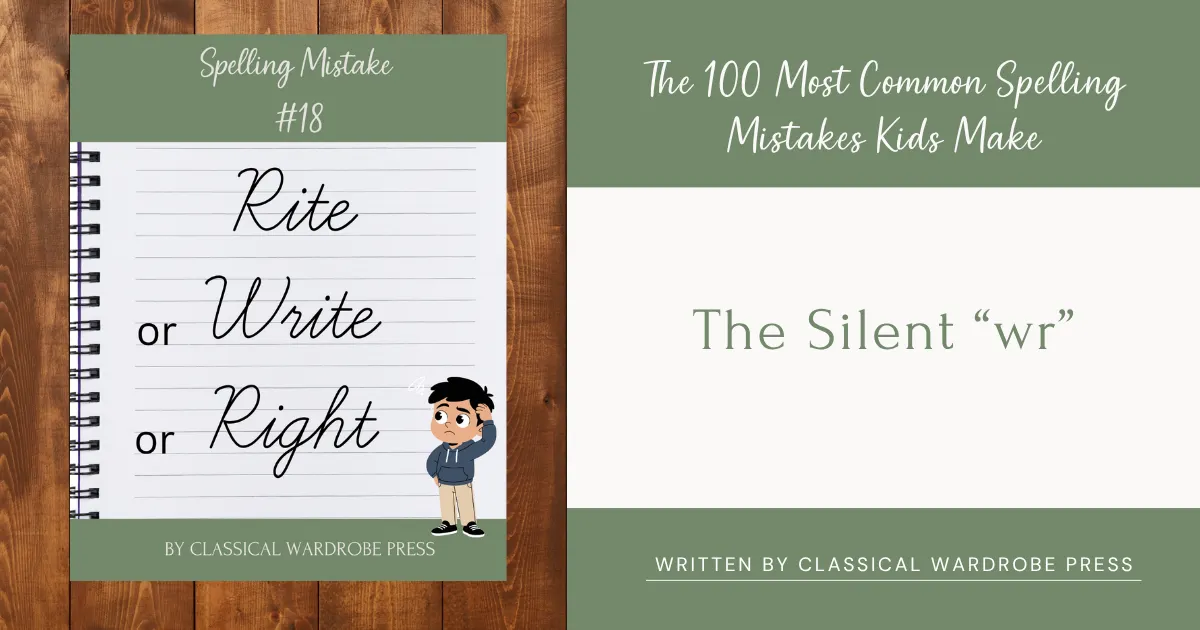
Many children spell wrong as rong or write as rite. These mistakes make sense because the w is silent. But why do we still write it?
Like the silent gh in night, the silent wr pattern is a reminder of the history of English.
The Silent WR Spelling
In words beginning with wr, the w is usually silent today.
Examples include:
- write
- wrong
- wrist
- wrinkle
- wrench
- wrap
Although we do not pronounce the w, it remains part of the spelling.
Why Is the W Silent?
In Old English, both letters were pronounced. Words such as write and wrong originally began with a pronounced WR sound.
Over time, English pronunciation changed and the w gradually disappeared from speech. The spelling, however, remained.
This is similar to The Silent GH Pattern we explored in our previous post, where older pronunciations were preserved in modern spelling.
A Common Spelling Mistake
Children often write:
❌ rong ✅ wrong
or
❌ rite ✅ write
Because they are listening carefully to sounds, they naturally spell the words as they hear them. This is not careless spelling. It is often evidence that the child is applying phonics correctly.
The next step is helping them notice that some English words preserve older spellings.
Learning Through Living Language
Rather than memorizing a list of silent wr words, begin with a sentence from a good book.
For example, from Charlotte's Web:
“Wilbur didn't want to go to bed. He wanted to stay up and listen.”
After reading, you might introduce the word wrong:
“Nothing felt wrong on the farm that evening.”
Now ask:
- What letters begin the word?
- Do we hear the w?
- Can you find other words that begin with wr?
Then build a word family:
- write
- wrong
- wrist
- wrap
The child begins to observe the pattern naturally through meaningful language.
This approach reflects the philosophy of Charlotte Mason, who encouraged children to learn through careful observation, rich literature, and attentive reading rather than endless drills.
Other Similar Spelling Patterns
The silent wr pattern belongs to a larger family of historical spellings.
You may also enjoy:
- Why Would, Could, and Should Have a Silent L
- Why Is GH Silent in Words Like Night and Light?
- The F to VES Spelling Rule: Why Leaf Becomes Leaves
Together, these patterns help children see that English spelling is often shaped by history.
Conclusion
Words like wrong, write, and wrist remind us that English spelling has a long memory.
When children learn to recognize patterns rather than memorize isolated words, spelling becomes more meaningful and much less mysterious. Through good books, careful observation, and repeated encounters with living language, even silent letters begin to make sense.