
Why Word Origins Can Make Pronunciation and Spelling Confusing
Why Word Origins Can Make Pronunciation and Spelling Confusing
Jan 26, 2026
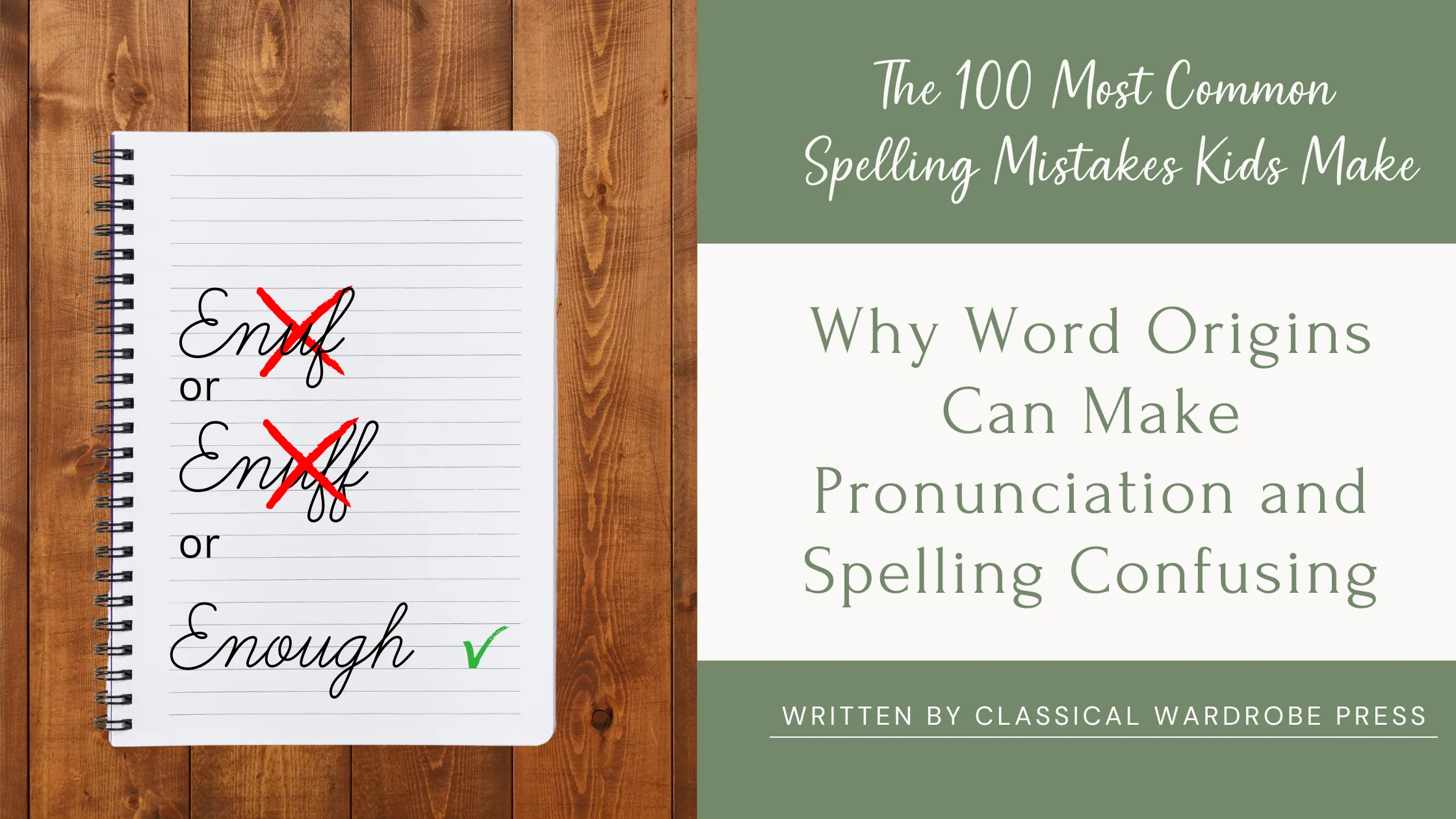
Parents are often puzzled when children spell words 'the wrong way'. A child writes enuf or enuff instead of enough, or nite instead of night, and it can feel as though phonics has failed. In reality, these spelling attempts often show careful listening and logical thinking. The confusion does not come from the child, it comes from the history of the English language.
English spelling reflects where words come from, not only how they sound today. When we understand a word’s origin, known as etymology, many so-called 'irregular' spellings begin to make sense.
The Case of Enough
The word enough is a perfect example. When spoken, it sounds like “enuf.” Children who are learning to write by sound often spell it exactly that way: enuf or enuff. From a phonetic point of view, these spellings are entirely reasonable.
So why do we spell it enough?
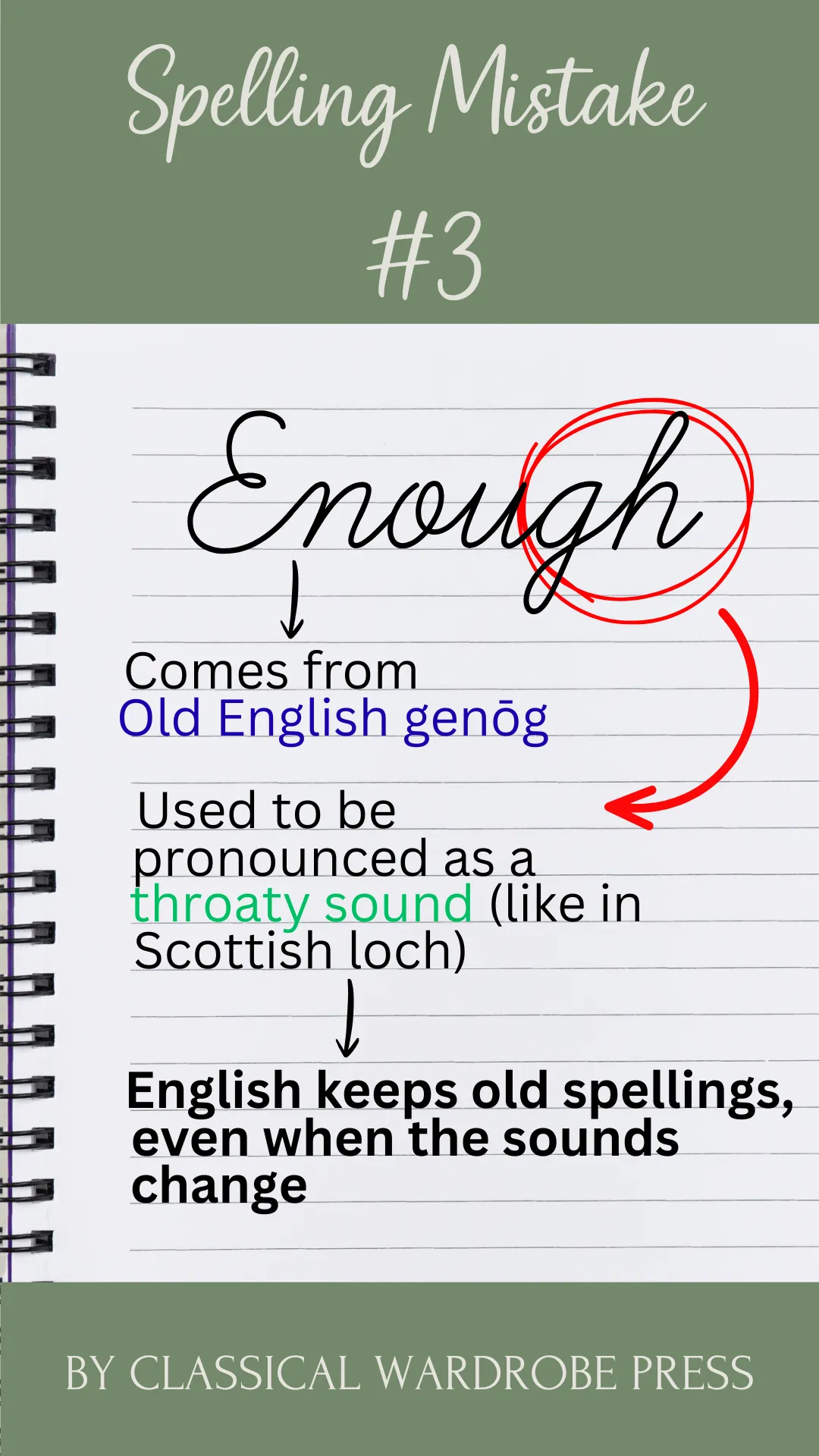
Enough comes from Old English, where it was once pronounced quite differently. It is cognate with Dutch 'genoeg', German 'genug', and Norse 'gnogr'.
The letters gh originally represented a throaty sound, similar to the sound still heard in words like the Scottish loch. Over time, the English pronunciation softened and that sound mostly disappeared. The spelling, however, remained.
English often does this. It keeps older spellings even when pronunciation changes. The result is a word that looks strange compared to how it sounds today. This is why enough is considered an irregular sight word and why phonics alone cannot fully explain it.
Other Words with the Same Problem
Enough is not alone. Many common English words carry the same historical weight, such as:
- Night: Once pronounced with an audible gh, the word lost the sound but kept the letters. Children naturally write nite, following sound rather than history.
- Write: The silent w comes from an earlier pronunciation. The word looks puzzling today, but its spelling reflects its past.
- Know: Like write, this word once had a sounded k. Children often spell it no, which matches modern pronunciation.
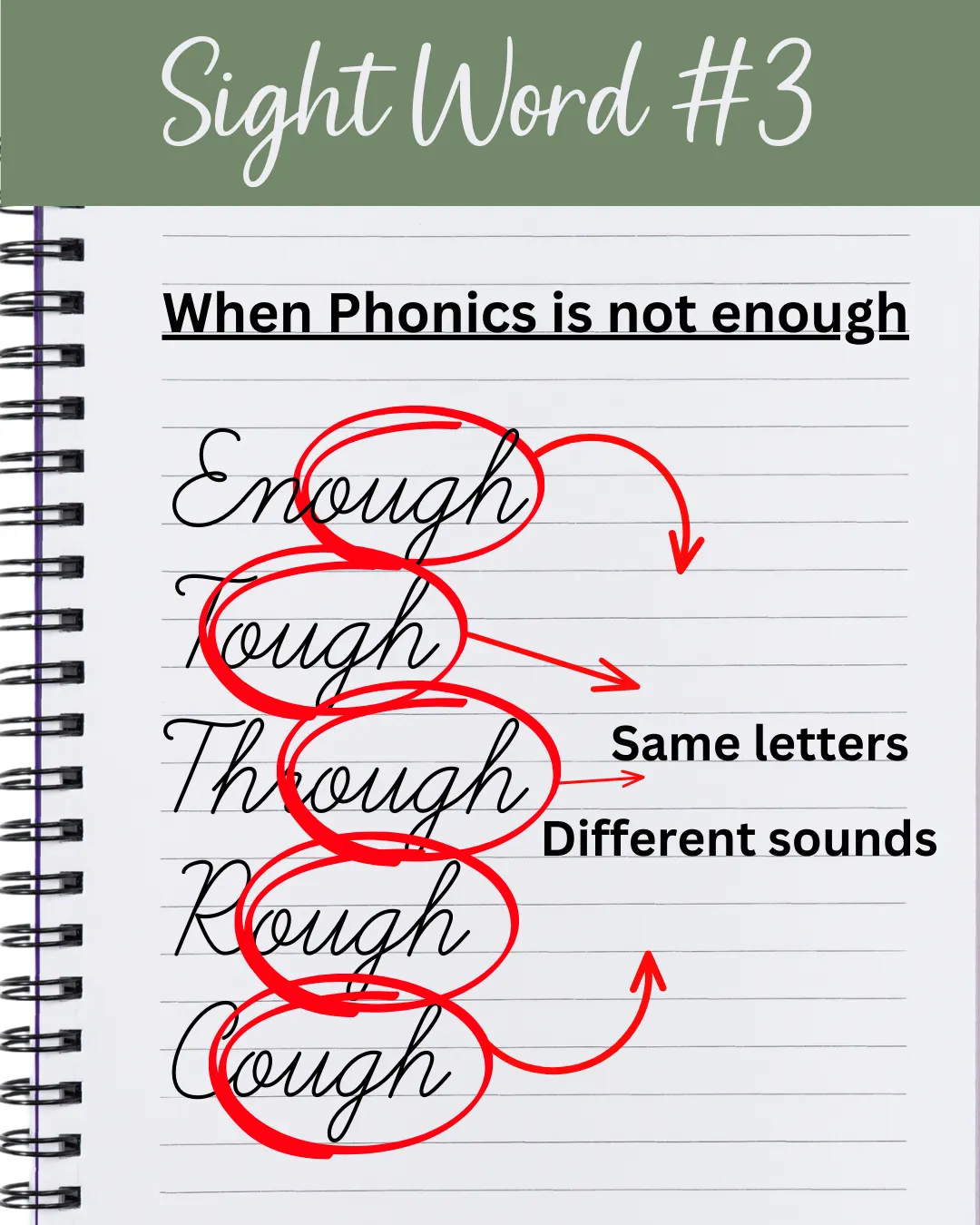
- Rough / Tough / Cough: These words all share the same spelling pattern (ough) but different sounds. There is no single phonics rule that explains them. Their spelling comes from older forms of English, while their pronunciations shifted in different directions.
When children spell these words phonetically, they are not guessing. They are applying logic to a language that has changed over centuries.
Why This Matters for Teaching Spelling
Understanding word origins helps parents and teachers respond calmly to spelling mistakes. Instead of seeing an error, we can see evidence of thinking. A child who writes enuf has heard the sounds accurately and represented them clearly.
This is why sight words are best learned:
- in meaningful context
- through reading rich language
- through copying real sentences
- not through isolated drills
Charlotte Mason emphasised the power of living books, prose, and poetry to build language naturally. When children meet words again and again in meaningful texts, spelling becomes familiar through use, not memorisation.
Language Is a Living Thing
English is not broken. It is alive. It carries the marks of history, sound changes, and borrowed words from many languages. Spelling tells the story of where words have been, not just how they sound today.
When we understand the etymology, spelling mistakes lose their power to worry us. They become part of the learning process, signs that a child is listening, thinking, and growing into the language.
Language is a living thing, shaped by time and use.