
When “Y” Becomes “IES”
When “Y” Becomes “IES”
Apr 21, 2026
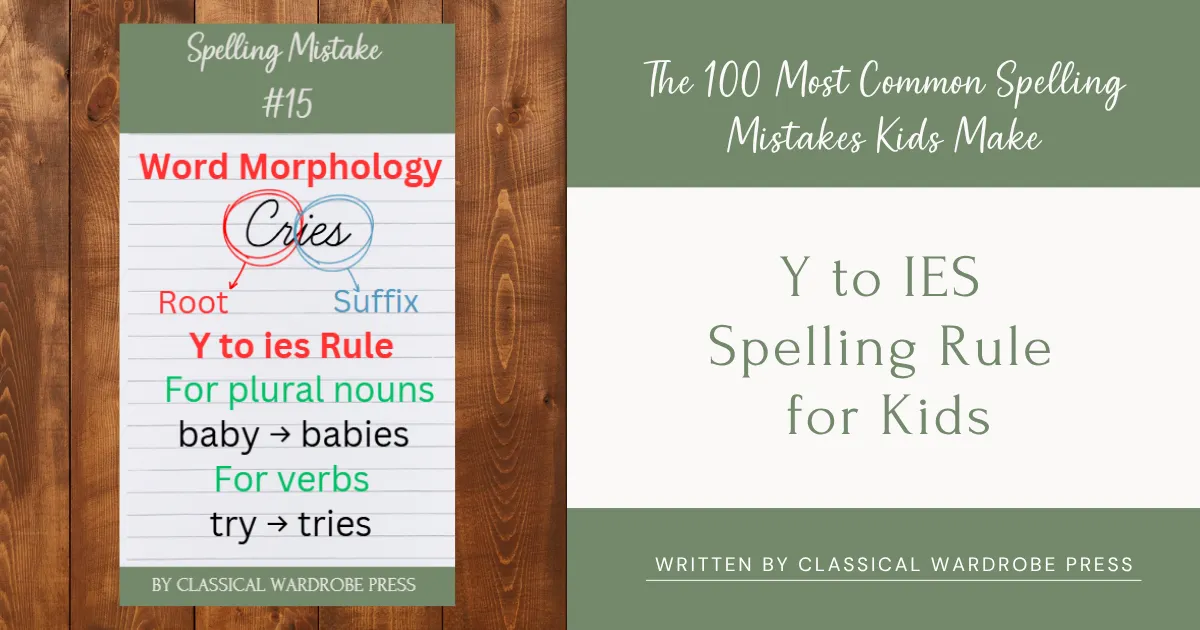
Children often write babys instead of babies, or crys instead of cries. These mistakes are very common, and very understandable. They show that the child is listening carefully to sounds. What is missing is an understanding of how spelling patterns work when suffixes are added.
This is where the “Y to IES Rule” becomes helpful.
What Is the “Y to IES” Rule?
When a word ends in a consonant + y, the y changes to i before adding a suffix, see The Consonant + Y Spelling Rule, and we add -es.
This creates the ending -ies.
For example:
- baby → babies
- lady → ladies
- cry → cries
- try → tries
This pattern appears in both:
- plural nouns (baby → babies)
- verbs (cry → cries)
How This Connects to Suffixes
As we explored in our previous post on suffixes, adding endings to words often changes their spelling.
In this case, the suffix is: -s / -es
But instead of simply adding -s, the word changes form:
- baby →
babys→ babies
This shows that spelling is not only about sound, but also about structure.
Why Does the “Y” Change?
The change from y to i helps the word flow more naturally and follow standard English patterns.
Without the change, words would look unusual and harder to read:
babysladys
By shifting to -ies, the word becomes clearer and more consistent.
When the Rule Does NOT Apply
If the word ends in a vowel + y, the spelling stays the same.
Simply add -s:
- boy → boys
- day → days
- play → plays
This contrast is important. It helps children see that the rule depends on the letter before the y.
How This Builds on the Consonant + Y Rule
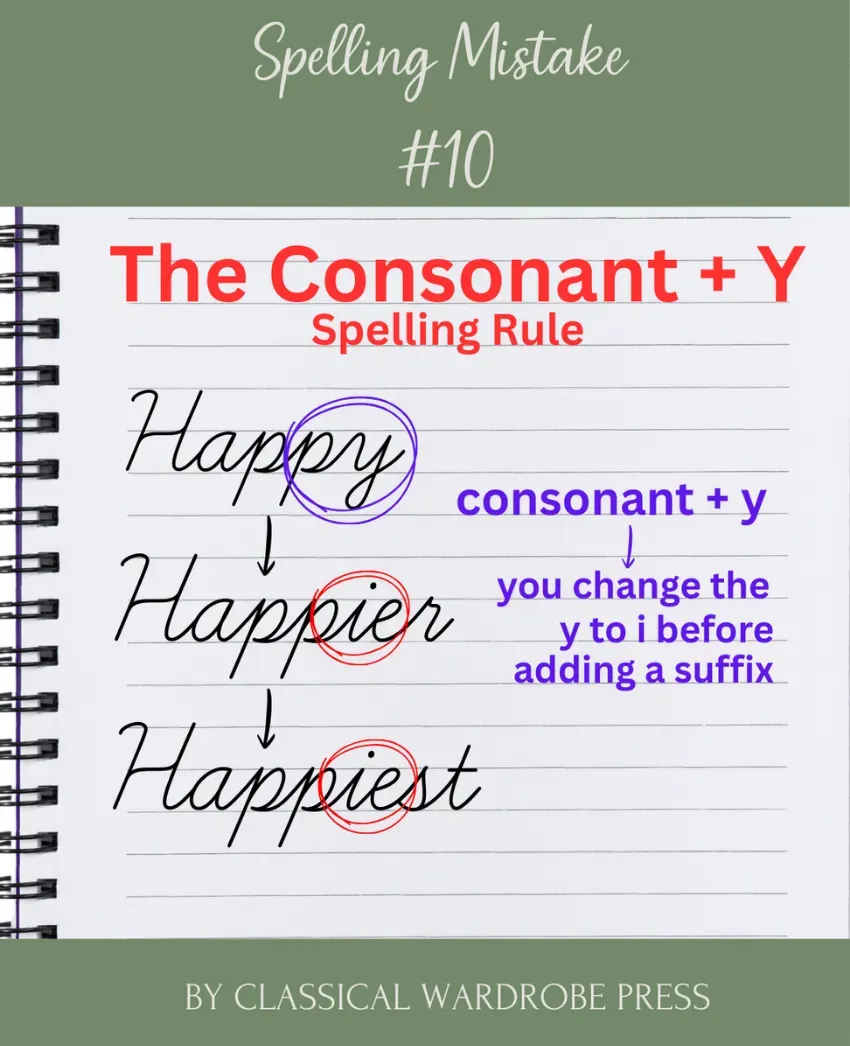
In your earlier post, see The Consonant + Y Spelling Rule, you explored how:
- happy → happier
- happy → happiest
This showed that y changes to i before adding suffixes.
This new pattern extends that idea:
- happy → happiness
- baby → babies
The same principle applies, but now with plural and verb endings.
Together, these patterns help children see consistency across many words.
A Gentle Way to Teach This Pattern
Instead of presenting this as a rule to memorize, guide children to observe.
For example:
- baby → babies
- lady → ladies
Ask:
- What changed?
- What stayed the same?
This encourages attention and understanding. This approach reflects the philosophy of Charlotte Mason, who emphasized learning through careful observation rather than rote memorization.
A Small Pattern That Builds Confidence
When a child writes babys, they are not guessing, they are applying what they hear.
By introducing the “Y to IES” pattern, we give them a clearer structure to follow.
Over time, they begin to:
- recognize correct forms
- understand how suffixes affect spelling
- write with greater confidence
Spelling That Makes Sense
The change from y to ies is a small adjustment, but it reveals something important: English spelling follows patterns.
When children learn to see these patterns, spelling becomes less about memorizing and more about understanding. And with steady practice, these forms become familiar, one word at a time.